
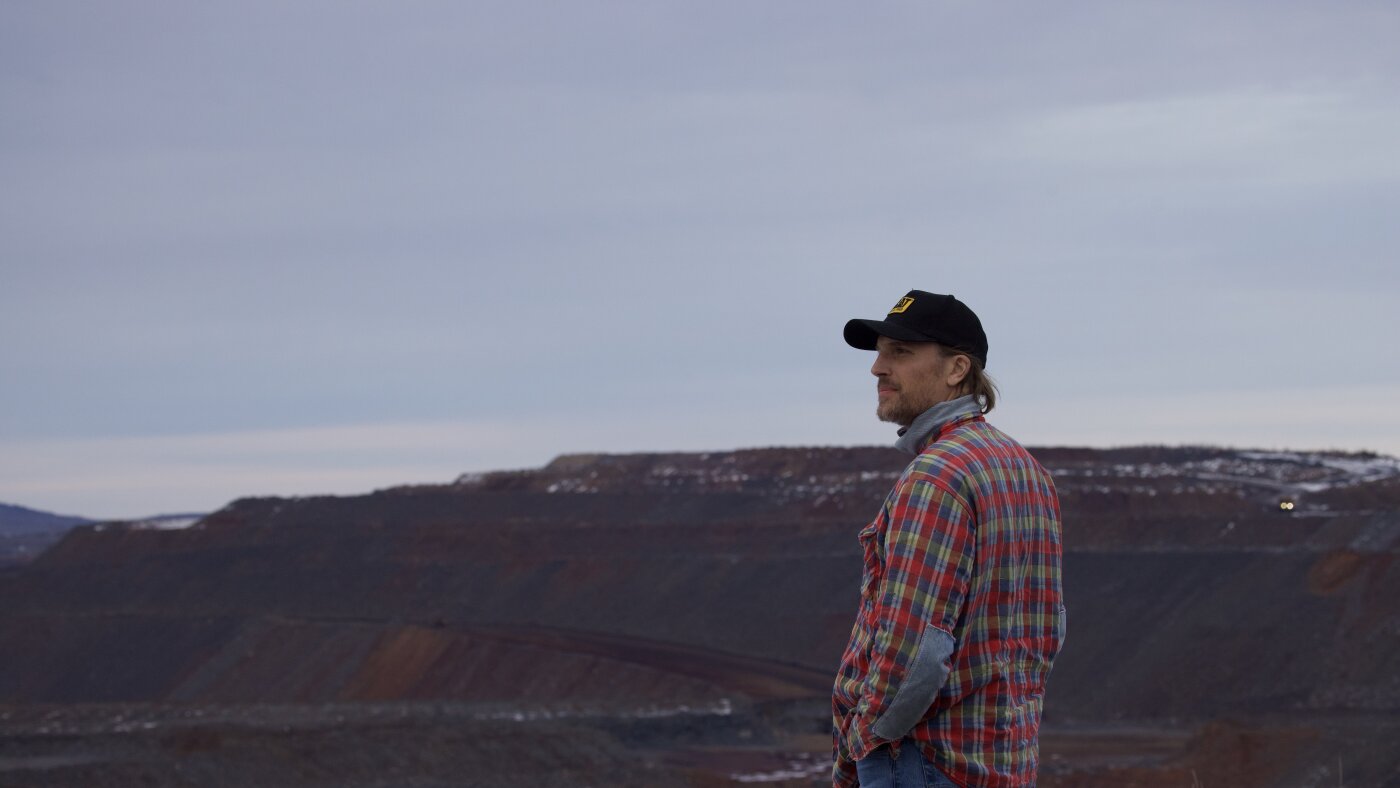
Luke Gulbranson had just gotten off the phone with his parents, was sipping his morning coffee, reciting his daily prayers and watching President Trump speak with reporters when he had a realization: he was going to run for Congress. "In that moment I was like, 'Wait, I'm going to do this. I'm going to actually throw my hat in the ring and do this,'" Gulbranson told NPR about his decision to challenge Republican Rep. Peter Stauber in Minnesota's 8th Congressional District as a Democrat.
This is his first campaign for elected office. But he's no stranger to life in the public eye. Before he entered the race, millions watched Gulbranson for three seasons on Bravo's reality television series "Summer House" and two seasons of its spin-off "Winter House." He isn't the only former reality TV star making a political debut in 2026 — at least two others are hopping into the political arena. Farrah Abraham, former star of MTV's "Teen Mom," announced she is running for Austin City Council, though she has not filed the necessary paperwork to officially run.
And perhaps most well-known this election cycle, Spencer Pratt, the "villain" of MTV's early 2000s hit show "The Hills" is vying to become the next mayor of Los Angeles. While some people may consider reality shows unserious, dramatic and even trashy, the genre seems to have become a training ground for politics. David Bresenham is an executive producer of reality TV Shows. Bresenham — who is also a lecturer at Stanford University where he teaches a class about reality shows and society — believes reality TV stars have what it takes to withstand the metaphorical bloodbath that politics can become.
These stars know how to navigate conflict, work a camera and often have experience dealing with public backlash. While traditional politicians are figuring out how to handle criticism, build name recognition and reach audiences through newer mediums, like social media, reality tv stars already have those credentials. "Politics, certainly today, you need to be able to interact well with cameras. You need to be able to speak in soundbites.
And you need to be able to present your ideas as succinctly as possible," Bresenham said. "If you've had success in reality TV, you're probably pretty good at those." Gulbranson doesn't see his time on television as an advantage against his opponents but he does believe it prepared him for politics in a way. In his view, politics isn't for the faint of heart and neither is being cast on a reality show. "I definitely think it helps me in having thick skin because I've noticed that politics is actually worse than reality television, " Gulbranson said.